Showing posts with label Abstinence. Show all posts

Saturday, October 30, 2010

If Alcohol Were Invented Today

[Originally posted on hellowellness.in 29 Sept 2010]


The word 'alcohol' was coined around 1540 by an Arabic chemist to describe the fine powder, or 'kohl,' used to stain or paint the eyelids.  Two centuries later, British writers borrowed the word to describe the intoxicating essence of wine -- an ironic twist, since the original Arabic chemist was very likely a Muslim and, as such, forbidden to drink it.  

If alcohol were invented today, international law would class it with the controlled substances, alongside opium, heroin, cocaine and the like.  The World Health Organization (WHO), in its most recent comprehensive report, writes:
Alcohol is a psychoactive substance with a known liability to produce dependence in humans and animals. If considered in the frame of the 1971 Convention on Psychotropic Substances, alcohol would qualify for scheduling as a substance that “has the capacity to produce a state of dependence, and central nervous system stimulation or depression, resulting in hallucinations or disturbances in motor function or thinking or behaviour or perception or mood”, and for which “there is suffi cient evidence that the substance is being … abused so as to constitute a public health and social problem warranting the placing of the substance under international control.”

The propensity to produce "dependence" -- a bland synonym, in this context, for the more controversial term "addiction" -- is the red flag that sets apart this relatively small class of drugs, including alcohol, from the millions of other known chemical compounds.  They are addictogenic.

The exact molecular mechanism of addictogenesis is still the focus of scientific investigation in several countries.  But the fact of its occurrence is beyond dispute.  The WHO report says, "The direct actions of alcohol on the brain and sustained alcohol exposure lead to longer–term molecular changes in the brain known as neuroadaptation."  That is, a number of neural pathways in the brain are altered to form a strongly self-reinforcing habitual behavior pattern that leads to adverse consequences for the organism.  

Among the pathways by which alcohol enters the brain is the brain's indigenous opioid system -- the same doorway by which the opiates such as heroin and codeine pass into the neural network.  

Wherever alcohol is introduced into a country on a large scale, there one finds the rise of alcohol addiction (alcoholism).  The WHO world surveys find a strong correlation between the level of alcohol consumption in a country, and its prevalence of alcohol dependence.  Statistically, more than three quarters of the dependence rate is correlated with the level of consumption, and this trend is even stronger in "developing" countries, among which the WHO report specifically names India.  

Alcohol marketing generates alcohol use.  Alcohol use generates alcohol addiction.  Alcohol addiction then sustains the alcohol market. 

In any country where alcohol use has become established, writes the WHO, a small minority of drinkers consume the bulk of the alcohol sold.  "A typical finding is that half of the alcohol consumed is consumed by 10% of the drinkers."  In the U.S., some reports indicate that 10 per cent of the drinkers drink 80 per cent of the alcohol.

Imagine, then, that by some magic pill you could  convert the 10 per cent into non-drinkers.  The alcoholic beverage market would crash more profoundly and disastrously than the mortgage and financial markets in our recent meltdown.  

The alcoholic beverage industry worldwide is absolutely built on alcohol addiction.  One has to say it; there is no way to sugarcoat it.  

Recently, after I outlined these economic facts to a person newly in recovery from alcoholism, she exclaimed, "But that's so illogical!"  

Of course, it's utterly illogical.  We have grandfathered alcohol and tobacco into the category of legal substances, even though the combined death toll from these two drugs is perhaps 15 times greater than the toll from all of the drugs proscribed as illegal.  

So, we have prisons full of people caught using or selling negligible quantities of drugs whose total impact on society is relatively small, while the pushers of mega-quantities of lethal addictive substances that kill as many people each year as die in major wars, floods and earthquakes sit in luxurious offices with princes, prime ministers, and police chiefs on their speed dials.  

Meditation can provide lucidity at times of mental turmoil.  My friend who exclaimed at the illogicality of current addiction policy became agitated and, for a while, I feared that the mental stress would tilt her toward relapse.  I suggested meditation, and she calmed down.  The next day we met and I asked for her thoughts.  

She said that after thinking it through, she was more determined to remain free of addictive substances than ever.  Said she, "I don't like being used."

Stone Sober -- and Absolutely Fascinating

[Originally published Sept. 4 2010 on hellowellness.in]


Jerry was at dinner with his ex-wife and his 12-year old daughter.  A fragile web of emotions spun across the table.  He felt delighted to be with his daughter, who looked happy to be with him, and his ex, for once, was not interfering. The waiter suggested a glass of wine.  Jerry demurred.  He so enjoyed being exactly as he was that he didn’t want even the mild alteration in mood brought on by a glass of Chardonnay.

Jerry is an emotionally intelligent man who knows from experience that even a small amount of alcohol will induce emotional and cognitive distortions. He does not drink because he treasures the natural chemistry of his feelings.  

The talk show host Dick Cavett once asked Katherine Hepburn whether she had ever used drugs or indulged alcoholically.  The actress’ reply is a classic:  “Cold sober, I find myself absolutely fascinating.”  

This sounds a bit narcissistic, which is only natural for a famous actress, but it has a core meaning with universal validity.  Cold sober, we are all of us worthy of esteem and interest, if we only take time to get to know ourselves.

Gillian E., a British artist living in San Francisco, recalls an idyllic moment: a beautiful beach, a glorious setting sun, a gentle breeze, a charming man beside her, and a glass in her hand.  In the glass:  fresh sparkling water. She asked herself, would I rather have alcohol instead?  The answer came back to her loud and clear: “No way.  This is just perfect the way it is. Drinking alcohol would interfere with this beautiful clarity that I feel, and would just get in the way.”  

Some time ago, I made an illegal left turn and got caught.  In traffic school, the instructor showed a video of people driving their cars on an obstacle course that required precision steering and quick reaction times.  They did well.  Then they were given one drink.  Their performance deteriorated, big time.  They were surprised -- they didn’t feel drunk.  But the trail of knocked-over traffic cones behind them didn’t lie.   

Such anecdotes are among the small building blocks of an emerging secular argument for complete abstinence from alcohol.  I mean, abstinence for healthy people, for everyone, not only for people who are already addicted to the stuff.  A secular case for abstinence is called for because it’s obvious that great numbers of people ignore religious prohibitions against alcohol, where they exist; and such prohibitions are altogether lacking in most flavors of the Christian faith, as an excellent article on
Christianity and Alcohol in Wikipedia points out.  

Not so very long ago, the media were filled with advertisements for the supposed social and psychological benefits of cigarettes.  We were given to understand that if we smoked, we would relieve our stress and we would become more attractive to other attractive people.  Cigarette smoking was painted as an essential glue of happy social relationships.  We now know better.  Most educated people in the U.S. no longer smoke.  

A similar awakening needs to happen with alcohol.  Alcohol as stress relief -- bunk.  Alcohol as social lubricant -- more bunk.  Alcohol as a sex magnet -- nonsense.  Alcohol as an essential part of pleasant social togetherness -- not true.  All lies, promoted by a multi-billion dollar industry totally lacking in ethics.  

Alcohol and wellness are polar opposites.  Wellness includes emotional intelligence, self-esteem, mental clarity, and fine coordination of the senses with the muscles.  Alcohol is a poison with a destructive impact on all the above.  It’s time for a cultural awakening, for a new appreciation of our sober selves, for an affirmation of our inborn capacities for healthy and happy living.

Thursday, May 14, 2009

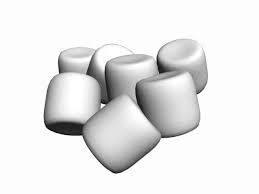
Don't drink that marshmallow

The marshamallow experiments are famous by now, thanks in large part to Daniel Goleman's Emotional Intelligence books, and their relevance to addiction seems obvious.  In 1968, Stanford psychology prof Walter Mischel presented four-year olds with a marshmallow and the choice: Eat it now, or wait 15 minutes and get two.  The kids who could delay the gratification ended up, a decade and more later, with higher SAT scores, higher graduation rates, better jobs -- in short, twice as many of the marshmallows life had to offer.  

It was often believed that the kids who could delay gratification did so thanks to more "will power."  Mischel -- according to a helpful and informative summary in this week's New Yorker, by Jonah Lehrer -- analyzed what this "will power" really consisted of.  He paid very careful attention to what went through the delaying kids' minds as they resisted the bait.  They succeeded because they had methods of distracting their minds from the lure.  They covered their eyes, or played hide-and-seek under the desk, or sang songs.  "Their desire wasn't defeated -- it was merely forgotten."  The key, Mischel found, was not to resist the marshmallow -- that didn't work --- but to avoid thinking about it.  

In further experiments, Mischel found that children could be taught cognitive tricks that helped them distract themselves.  Even reducing the intensity of the temptation by pretending that the marshmallow was only a picture of a marshmallow or that the marshmallow was really a cloud worked for some children.   

Mischel and other researchers Lehrer quotes are skeptical of finding a genetic basis for the ability to delay gratification.  Too many genes are involved in even the simplest aspects of personality.  The cutting edge of research lies in classroom curricula that teach self-distraction, and in educating parents to cultivate simple cognitive skills in children.  Says Mischel:

"We should give mashmallows to every kindergartner... We should say, 'You see this marshmallow"  You don't have to eat it.  You can wait.  Here's how.'"

Wednesday, January 21, 2009

Congratulations to Barack Obama


As a college student at Wesleyan in '61 (or was it '62?) I joined with other white students to team with groups of black students from Howard University in an effort to integrate lunch counters in Glen Burnie, a suburb of Baltimore.  In some places we sat indefinitely without being served; in one, we were served coffee with salt in it; at another they locked the doors as we approached.  When we picketed the segregated local movie theatre, a mob of white men surrounded us as sheriffs watched.  A providential cloudburst scattered the crowd and allowed us to escape.  

On the night of election day in 1964, I arrived at the civil rights movement headquarters in Jackson, Mississippi, to begin a few months of volunteer work.  Nearly everyone was glued to the TV set to see whether the Democratic Party would seat the elected black delegates running under the banner of the Freedom Democratic Party.  The answer was, no.  

These and other memories came upwelling as I watched the inauguration of Barack Obama.   The party that wouldn't seat elected black delegates had nominated a black man for president.  A man whose father would not have been served at DC area restaurants 60 years ago was taking the oath of office.   Indeed, there has been some changes.

This morning's San Francisco Chronicle editorializes that Obama's new approach is "grounded in sobriety and hard work."  The "sobriety" that's meant here is, I assume, the metaphorical kind -- a pragmatic, realistic attitude -- and not the literal kind, meaning abstinence from alcoholic drink.  Yet there's a connection to reflect on, here.  

For me, personally, my time of active engagement in the civil rights movement was largely a time when my alcoholism (acquired in my freshman year in college) was in remission.  Engagement in life-changing work was hugely more interesting than drink.  My drinking habit only bloomed large during the years of reaction that followed, when it seemed that everything we had done was being undone.  Pessimism, despair, lack of hope were the atmosphere in which this illness flourished.  And I'm not the only one.  Is it an accident that the drug problem grew larger in rough proportion as conditions for the poor and middle class in America stagnated and deteriorated?  

Barack Obama's own history with alcohol and other drugs offers a refreshing contrast to that of his predecessor in office.  Obama has freely and openly admitted experimenting with drugs as a youth, but then stopped; he is trying to quit, or has quit, smoking.  What a contrast to the history of "W," whose claimed mid-life alcohol salvation story is widely believed to be a sham that covered up more than it revealed, notably a long history of cocaine use, some say.  

I've not yet seen anything in the way of Obama's statements so far that gives a clue to his specific policies on alcoholism and other addictions.  The federal government has many levers to pull and many dollars to spend in this area.  On general principles, I assume that Obama will support the recent extension of parity in the treatment of mental health and addiction treatment.  I assume that the federal agencies in this area will continue to be funded.  

The open questions in my mind are (a)  War on Drugs, and (b) Federal excise taxes on spirits and tobacco.  We need "change we can believe in" in the "war on drugs," a criminal exercise in hypocrisy and racial/economic persecution that is long overdue for radical reform.  An even more telling mark of Obama's mettle will be whether he supports Congressional action to raise the excise taxes on liquor and tobacco.  Public health advocates have long maintained that raising these taxes is the single most effective measure to reduce the social impact of these two most murderous addictive drugs.  Needless to say, the pillars of corporate greed stand deeply dug in on this issue.

The largest opening in the clouds under this new administration will be in the area of improving living standards and reducing inequities for the poor and middle class.  If the real and emotional environment of ordinary people in this country becomes infused with progress and hope, the problems of alcohol and other drugs will recede as if of their own accord.  It will take some time, but if the new administration succeeds in this largest and most difficult of goals, we will, in fact, see a new era of "sobriety" in both senses of the word.

Congratulations to President Barack Obama, and best wishes for the future.

P.S.  To date, the White House Office of National Drug Control Policy remains under an interim head, Patrick Ward, a Bush appointee who has held the post a bit over a year.  Obama's choice of Rep. Jim Ramstad to become the new Drug Czar has run into heavy fire for Ramstad's ties to abusive "faith-based" programs, his policy positions on prevention, and his ties to a massive investor fraud.  Read Maia Szalavitz's blog blast and the Drug Policy Alliance editorial.  Ramstad is not change, he's MOTSOS.  

Wednesday, February 06, 2008

Abstinence leads to rapid brain repair

Abstinence leads to rapid repair of gross brain damage seen in alcohol dependent persons, according to a review of neuroimaging studies by a group of Japanese researchers.
In uncomplicated alcoholic patients, a high incidence of cortical shrinkage and ventricular dilatation were reported using brain CT scans. In older alcoholics, prefrontal gray matter deficits were especially marked when compared with younger alcoholics. Reversibility of brain shrinkage is a common neuroimaging finding in patients with alcohol dependence.
Regrowth of shrunken brain areas was particularly vigorous during the first month of abstinence, the scans showed. Besides the gray matter, areas "with significantly greater recovery in abstainers were the temporal lobes, thalamus, brainstem, cerebellum, corpus callosum, anterior cingulate, insula, and subcortical white matter." Follow-up studies showed that the regrowth was not simply due to rehydration.

The study appeared in the Dec. 2007 issue of the Japanese Journal of Alcohol Studies and Drug Dependence. The abstract is here.