Showing posts with label Minorities. Show all posts

Wednesday, January 21, 2009

Congratulations to Barack Obama


As a college student at Wesleyan in '61 (or was it '62?) I joined with other white students to team with groups of black students from Howard University in an effort to integrate lunch counters in Glen Burnie, a suburb of Baltimore.  In some places we sat indefinitely without being served; in one, we were served coffee with salt in it; at another they locked the doors as we approached.  When we picketed the segregated local movie theatre, a mob of white men surrounded us as sheriffs watched.  A providential cloudburst scattered the crowd and allowed us to escape.  

On the night of election day in 1964, I arrived at the civil rights movement headquarters in Jackson, Mississippi, to begin a few months of volunteer work.  Nearly everyone was glued to the TV set to see whether the Democratic Party would seat the elected black delegates running under the banner of the Freedom Democratic Party.  The answer was, no.  

These and other memories came upwelling as I watched the inauguration of Barack Obama.   The party that wouldn't seat elected black delegates had nominated a black man for president.  A man whose father would not have been served at DC area restaurants 60 years ago was taking the oath of office.   Indeed, there has been some changes.

This morning's San Francisco Chronicle editorializes that Obama's new approach is "grounded in sobriety and hard work."  The "sobriety" that's meant here is, I assume, the metaphorical kind -- a pragmatic, realistic attitude -- and not the literal kind, meaning abstinence from alcoholic drink.  Yet there's a connection to reflect on, here.  

For me, personally, my time of active engagement in the civil rights movement was largely a time when my alcoholism (acquired in my freshman year in college) was in remission.  Engagement in life-changing work was hugely more interesting than drink.  My drinking habit only bloomed large during the years of reaction that followed, when it seemed that everything we had done was being undone.  Pessimism, despair, lack of hope were the atmosphere in which this illness flourished.  And I'm not the only one.  Is it an accident that the drug problem grew larger in rough proportion as conditions for the poor and middle class in America stagnated and deteriorated?  

Barack Obama's own history with alcohol and other drugs offers a refreshing contrast to that of his predecessor in office.  Obama has freely and openly admitted experimenting with drugs as a youth, but then stopped; he is trying to quit, or has quit, smoking.  What a contrast to the history of "W," whose claimed mid-life alcohol salvation story is widely believed to be a sham that covered up more than it revealed, notably a long history of cocaine use, some say.  

I've not yet seen anything in the way of Obama's statements so far that gives a clue to his specific policies on alcoholism and other addictions.  The federal government has many levers to pull and many dollars to spend in this area.  On general principles, I assume that Obama will support the recent extension of parity in the treatment of mental health and addiction treatment.  I assume that the federal agencies in this area will continue to be funded.  

The open questions in my mind are (a)  War on Drugs, and (b) Federal excise taxes on spirits and tobacco.  We need "change we can believe in" in the "war on drugs," a criminal exercise in hypocrisy and racial/economic persecution that is long overdue for radical reform.  An even more telling mark of Obama's mettle will be whether he supports Congressional action to raise the excise taxes on liquor and tobacco.  Public health advocates have long maintained that raising these taxes is the single most effective measure to reduce the social impact of these two most murderous addictive drugs.  Needless to say, the pillars of corporate greed stand deeply dug in on this issue.

The largest opening in the clouds under this new administration will be in the area of improving living standards and reducing inequities for the poor and middle class.  If the real and emotional environment of ordinary people in this country becomes infused with progress and hope, the problems of alcohol and other drugs will recede as if of their own accord.  It will take some time, but if the new administration succeeds in this largest and most difficult of goals, we will, in fact, see a new era of "sobriety" in both senses of the word.

Congratulations to President Barack Obama, and best wishes for the future.

P.S.  To date, the White House Office of National Drug Control Policy remains under an interim head, Patrick Ward, a Bush appointee who has held the post a bit over a year.  Obama's choice of Rep. Jim Ramstad to become the new Drug Czar has run into heavy fire for Ramstad's ties to abusive "faith-based" programs, his policy positions on prevention, and his ties to a massive investor fraud.  Read Maia Szalavitz's blog blast and the Drug Policy Alliance editorial.  Ramstad is not change, he's MOTSOS.  

Monday, February 26, 2007

U.S. docs more likely to warn minorities about drinking

American doctors are twice as likely to warn African-American and Hispanic patients about drinking and drug use than white patients, a study by Harvard professor Kenneth Mukamal, M.D. (photo) has found.

"Yet blacks are less likely to be binge drinkers than whites," he said.

"It would be naive to disregard the possibility of racial bias or stereotype toward blacks and Hispanics in medical settings and assume that the difference in who gets counseling about alcohol use is coincidental," said one commentator.

Doctors should be asking about alcohol use, but should be asking about it across the board, Mukamal said. Details.

Wednesday, February 21, 2007

Stores sell liquor to white teen using black ID

Carson City, NV: A 16-year-old white boy using the identification of a 31-year-old black man was served alcohol by two out of 15 businesses visited during an alcohol compliance check conducted by the Carson City Sheriff's Department recently. Source.

Australia: Alcohol kills indigenous person every 38 hours

ALCOHOL kills one indigenous Australian every 38 hours, landmark research has found.

The average age of those dying from alcohol-attributable causes - mostly suicide for men, or alcoholic liver cirrhosis for women - is about 35 years.

National Drug Research Institute (NDRI) Indigenous Australian Research team leader Dennis Gray said these were conservative estimates from a first-of-its-kind study of the problem which showed alcohol killed 1145 indigenous Australians between 2000 and 2004.

"If we are serious about addressing this disparity and reducing death rates among indigenous Australians, we need to focus on the underlying social causes of that ill health," Professor Gray said. "For instance, suicide is the most frequent alcohol-caused death among indigenous men, which reflects the despair that many indigenous people feel."

Senior Research Fellow Tanya Chikritzhs said she was shocked to discover indigenous women as young as 25 years were dying of haemorrhagic stroke due to heavy drinking. Source.

Saturday, February 10, 2007

Captain Al Cohol: Arctic superhero


A 1973 comic featuring Captain Al Cohol, a superhero of the Arctic north who had one fatal weakness -- guess -- has been republished, complete, on the web. Source. The comic shows alcoholism as something that even the strongest men can fall into, and it makes an effort to localize its message to the Inuit culture.

Thursday, January 11, 2007

Frat brothers defaced dead boy with magic markers

His lifeless body was defaced with offensive remarks from head to toe.

That's what an autopsy released Tuesday Jan. 9 2007 shows happened to Phanta "Jack" Phoumarrath, the University of Texas (Austin) fraternity member who died of alcohol poisoning in 2005.

It also shows his blood alcohol content was five times the legal limit.

Some members of Lambda Phi Epsilon have been indicted in his death.

The family's attorney says the suspects seem to have spent a considerable amount of time drawing on Jack, when they could have been helping him instead.

"They wrote a variety of things, most of which would be considered juvenile. Some of which were lewd. It was disappointing and certainly discouraging to the family that people who hold themselves out as fraternity brothers would do something like this," Phoummarath family attorney Randy Sorrels said.

UT suspended Lambda Phi Epsilon as a registered student organization until 2011, after determining that hazing had occurred. Source.

Many of the epithets scrawled on Jack's body were homophobic. Source.

Saturday, January 06, 2007

Minorities face treatment gap

Hispanics and African-Americans with severe alcohol problems are significantly less likely to obtain treatment than whites with the same problem severity, a study by San Francisco researcher Laura Schmidt and colleagues has found. Cost and logistic were cited most frequently as barriers to obtaining treatment. Abstract. Press Release.

Wednesday, December 13, 2006

Displaced San: "This beer will finish us"

KAUDWANE, Botswana: A group of San people driven from their ancestral hunting grounds by the Botswana government find little to do in their resettlement camp in the Kalahari desert but drink fermented barley beer.

“I suffer here. I want to go home, where I know where to find plants to eat and eland to hunt,” said 61-year-old Letshwao Nagayame, one of the displaced village elders (Reuters photo). “Here all we do is drink — this beer, it will finish us.”

The San (often called "Bushmen") charge that they were driven off their lands in order to make way for diamond mining. Their appeal is before Botswana's high court. More. Nagayame charges that last year he was beaten and tortured for hunting on the land his people had occupied for more than 20,000 years. Source.

P.S. December 14: The Botswana Supreme Court ruled 2-1 today that the San could return to their homelands. Source.

Sunday, December 10, 2006

Dallas' Pearl Guards mission unfinished

Fifteen years ago, students at Pearl C. Anderson middle school in south Dallas, led by teacher Ron Price, formed the "Pearl Guards" to clean up the environment around the school, particularly liquor stores that were a magnet for drunkenness, prostitution, and other crimes. Their protests led to a city ordinance supposedly creating a 1000-foot clean zone around schools ... but loopholes and lax enforcement have left many students and school staff feeling betrayed.
More than a decade after a group of South Dallas youngsters known as the Pearl Guards fought to eliminate alcohol businesses near their middle school, little has changed: Customers exit the businesses with bottles in brown paper bags. Homeless people linger out front. Some patrons drink in the parking lots, and brawls break out.It often unfolds as youngsters make their way to and from nearby schools. "The mental pictures – they're poisoning to the mind, especially the younger kids'," said Richard Harper, who was a Pearl Guard 15 years ago.
This article in the Dallas Morning News delves into the complex web of local and statewide zoning politics and beverage industry juice that the students and their educators face in trying to surround the schools with a decent environment.

Sunday, December 03, 2006

Bush's Afghan heroin coming to U.S. cities

The record opium crop in Afghanistan, thanks to the U.S. -installed and -backed Afghan drug lord regime, is on its way to becoming the next heroin epidemic in America's inner cities, says the African-American Opinion blog. The blog draws the comparison with the Iran-Contra scheme of the Reagan years, when the right-wing death squads in Nicaragua were financed through the cocaine trade, which brought crack cocaine into America's ghettoes under the legal umbrella of the CIA. Read about it.

"Half Nelson" wins indie film awards

The movie "Half Nelson," about a cocaine-addicted middle school teacher, reviewed with enthusiasm earlier on this blog, won the best feature and best director prizes, and its 16-year old female star Shareeka Epps was named breakthrough actress at the recent Gotham Awards ceremony, honoring low-budget independent films. Source. See my review.

Drug informant recants in grandmother's killing

Police who shot and killed a 92-year old African-American grandmother in her home in Atlanta on Thanksgiving day claimed that an informant had bought drugs at her house earlier in the day. Now the informant has come forward and denied the story; he says police told him to fabricate the lie afterwards as a coverup. Source.

Saturday, November 25, 2006

Osage Congress passes anti-meth law

PAWHUSKA, Okla. The Osage Nation's new Congress has unanimously passed a law that it hopes will close a possible loophole in Oklahoma's much-lauded anti-methamphetamine legislation.

The Osage Nation is the first American Indian tribe to pass its own anti-meth bill. It bans possession of more than 9 grams of ephedrine or pseudoephedrine, which are cold medicine ingrediates used to make meth.

When state lawmakers passed their anti-meth law, one concern was that meth cooks might move their operations to tribal land. Osage National officials say they hope the tribal law will discourage that.Under the tribal law, violators can receive a 1-year prison sentence and a 10-year banishment from the tribe. In particularly egregious cases on tribal land, federal courts would likely take jurisdiction. Source.

Tuesday, November 21, 2006

Maori twice as likely to become addicted

New Zealand National Addiction Centre director Professor Doug Sellman said today that after considering variables such as age, gender, education and household income, Maori were twice as likely to have lifetime substance use disorders than other ethnic groups. He said that the reasons were not fully understood. Source. Wikipedia on the Maori.

Monday, November 20, 2006

Author of crack sentencing bill calls it a mistake


The author of the 1986 bill that mandated a 100-times more severe sentence for crack cocaine than for powder now calls the bill "a terrible mistake."

Eric Sterling was the lawyer for the House Judiciary Committee from 1979 to 1989 and wrote the mandatory sentencing bill that requires five years imprisonment for possession of five grams of crack cocaine.

In an op-ed piece, Sterling also says that the way the Justice Department has enforced the bill has been "a disaster."

Sterling writes that "almost all federal crack prosecutions involve people of color. Indeed, for years no whites were prosecuted for crack offenses in many federal courts, including those in Los Angeles, Chicago, Miami, Denver, Dallas or Boston."

Fixing the 100-1 disparity is only part of the solution, Sterling writes. It's also necessary to focus prosecution on the big dealers, the people who import the drug by the tens of kilograms. Federal prosecutors have wasted millions of dollars and countless hours prosecuting small time neighborhood dealers and couriers, Sterling says.

Read the full article here.

Source.

Wednesday, November 15, 2006

Federal judge turns against crack penalties

A federal judge who led the move to impose harsh penalties for crack cocaine under the first Bush administration has turned around and now condemns the sentencing rules as "unconscionable."

US District Judge Reggie B. Walton told the US Sentencing Commission that federal laws requiring dramatically longer sentences for crack cocaine than for cocaine powder led to the perception within minority communities that courts are unfair.

Walton said a white college student arrested with a kilogram of powder cocaine would probably get 3 to 4 years in prison, while a black high school dropout caught with the same amount of crack would face a mandatory 10-year sentence and the possibility of a life sentence. Read more.

Between 1989 and 1991, Judge Walton served as President George H. W. Bush's Associate Director of the Office of National Drug Control Policy in the Executive Office of the President and as President Bush's Senior White House Advisor for Crime.

Tuesday, October 31, 2006

Blacks strike back against Big Tobac

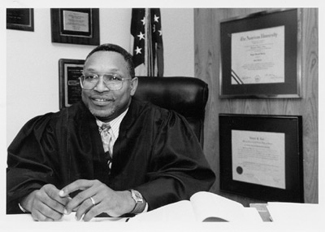
Carol-McGruder.gifCarol McGruder (right), Director of the San Francisco African American Tobacco Free Project, has launched BlacksForProp86.org, a grassroots initiative of African American health professionals, researchers, clergy, tobacco control advocates and concerned community members to support the passage of Prop 86.

BlacksForProp86.org, McGruder says, want the tobacco industry to know that if they want to help us they need to stop marketing their deadly products to our community and stop co-opting our leadership organizations. Each year over 45,000 African Americans die from tobacco related illnesses. Who will stand in truth for the 45,000 sisters, brothers, mothers, fathers, and grandparents taken from us? We will, we stand in truth for the 900,000 African American lives lost during the past 20 years of tobacco industry “regressive tax” rhetoric. Source.

Saturday, October 28, 2006

Crack laws target Afro-Americans: ACLU

Federal crack cocaine sentencing laws have filled federal prisons with small time users, mainly African-Americans, while white powder cocaine users get off easier and dealers run free. So says a report by the American Civil Liberties Union released today on the 20th anniversary of the mandatory minimum sentencing laws.

The law "established a 100-to-1 disparity between distribution of powder and crack cocaine," the report points out. Distributing just five grams of crack gets you five years in federal prison. To get the same sentence for powder cocaine, you'd have to distribute 500 grams -- a metric pound.

The mandatory sentencing law for crack cocaine has been used to fill the federal prisons with African-Americans.
Recent data indicates that African Americans make up 15 percent of the country’s drug users, yet they make up 37 percent of those arrested for drug violations, 59 percent of those convicted, and 74 percent of those sentenced to prison for a drug offense. More than 80 percent of the defendants sentenced for crack offenses are African American, despite the fact that more than 66 percent of crack users are white or Hispanic.
African-Americans on the average get an almost 50 per cent longer sentence for possessing the same amount of the drug as other ethnic groups, the report points out.

Most of those filling the federal prisons are small time users or street corner dealers. The law has not been effective against major distributors. It has not made a dent in the wholesale side of the supply pipeline for the illicit drug.

A summary of the ACLU report is here. Full text here. Good audio segment on NPR here.

The Health Care Blog calls the 20-year old crack law "possibly the worst single bill ever passed by Congress." Source.

Thursday, October 26, 2006

Flag-raising Marine a victim of alcoholism

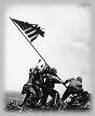
Marine Pvt. Ira Hayes was one of the six Marines who raised the flag at Iwo Jima, in a photograph that became a symbol of national price. Hayes, a Native American of the Pima people, died of exposure and alcoholism in 1955, his body discovered near his Gila River Reservation home in Arizona. He was 32. Hayes and his tragedy are featured in Clint Eastwood's latest movie, Flags of our Fathers. Source.

Sunday, October 08, 2006

Fraternities: Another Jungle

Upton Sinclair's novel The Jungle did more than any other single work to arouse public opinion against the malevolent excesses of the American meat packing industry, and to initiate its reform. Now another literary heavyweight, the prolific author Joyce Carol Oates, has come forward with a short story (Landfill in the current New Yorker, source) that ought to arouse a similar passion about the jungle of college fraternities.

Oates' fictional story describes the death of Hector Campos Jr., a Latino student at Michigan State University, who got drunk and either fell or was pushed down a trash chute into the dumpster behind the Phi Epsilon fraternity. Authorities found his body three weeks later -- three weeks of agony for his parents -- in the county landfill. Oates writes in a documentary style, sequencing factual detail after detail until the resulting tapestry becomes emotionally overwhelming.

Newspaper reports of real deaths of real college students don't seem to have made much of a dent in the college fraternity drinking scene. Source. Maybe Oates' intensely felt and written fictional piece in the New Yorker will succeed where journalism has failed. Thank you, Ms. Oates, for the effort.