Alcohol is a psychoactive substance with a known liability to produce dependence in humans and animals. If considered in the frame of the 1971 Convention on Psychotropic Substances, alcohol would qualify for scheduling as a substance that “has the capacity to produce a state of dependence, and central nervous system stimulation or depression, resulting in hallucinations or disturbances in motor function or thinking or behaviour or perception or mood”, and for which “there is suffi cient evidence that the substance is being … abused so as to constitute a public health and social problem warranting the placing of the substance under international control.”
The world needs new models of recovery from addiction to alcohol and other drugs. This blog is my classroom, where I learn about the many issues involved in addiction and recovery. You're welcome to look over my shoulder as I learn, and to enter your comments.
Saturday, October 30, 2010
If Alcohol Were Invented Today
Sunday, November 04, 2007
Mile wide and an inch deep
Tommy Tester, 58, of
Tester, the minister of
Police said Tester, who was wearing a skirt, pulled up in his vehicle to Belmont Carwash, got out and urinated in a wash bay in view of children. Source.
The unexpurgated version here. -- Thanks, Kelly C., for the tip
Thursday, September 13, 2007
Another Court Rules that AA/NA are Religious
A recent court case ruled that a parolee can sue a parole officer for damages if the parole officer requires the parolee to attend 12-step groups such as Alcoholics Anonymous or Narcotics Anonymous when this violates the parolee's religious or non-religious beliefs.The case is titled Inouye v. Kemna, issued Sept. 7, 2007. The full text of the opinion is here. The court that issued the decision is the Ninth Circuit of the United States Courts of Appeal. The court's ruling is the law in California, Oregon, Washington, Arizona, Montana, Idaho, Nevada, Alaska, Hawaii, Guam, and the Northern Mariana Islands.
Ricky Inouye was imprisoned in Hawaii after conviction on drug charges, and served his time. As a Buddhist, he objected to participating in 12-step treatment programs because of their religious nature. After his release, he sued his parole officer, Nanamori, for giving him the "choice" of AA/NA meetings or prison.When that case came to trial in the federal court in Hawaii, Nanamori argued that he, a parole officer, could not have known whether AA/NA are "religious" because the law on that issue was foggy at the time he ordered Inouye to participate (2001). If the issue was unclear, Nanamori was immune from suit. Nanamori won on that issue in the lower federal court in Hawaii. Inouye (or rather his son Zenn, Ricky having meanwhile died) appealed to the Ninth Circuit.
The Ninth Circuit's opinion makes short work of the claim that the law was fuzzy on the religious nature of AA/NA. The court points to virtually identical cases decided before 2001 by the federal courts of appeal for the Seventh Circuit (Illinois, Indiana, Wisconsin) and the Second Circuit (New York, Connecticut, Vermont), in addition to a string of similar cases in lower federal courts and in state courts, all with the same result. The "unanimous conclusion" of these courts was that coercing a person into AA/NA or into AA/NA based treatment programs was unconstitutional because of their religious nature. Because the law on this issue was "uncommonly well settled," Nanamori cannot claim immunity.
Accordingly, the Ninth Circuit sent the case back to the lower federal court in Hawaii to decide how much, if anything, Nanamori has to pay Inouye's estate in monetary damages.
The court's ruling means that criminal justice officers -- or, arguably, any agents of the state, local, or federal government within the bounds of the Ninth Circuit -- can be sued for damages if they ignore a client's religious or anti-religious objections and coerce the person to attend 12-step meetings or 12-step based treatment programs.
What should prisoners, parolees, and criminal justice officers do in response to this ruling?
(1) Prisoners and parolees who have problems with the religious content of 12-step programs should stand up for their beliefs and make their objections heard, loud, clear, early, and on paper. In this case, Ricky Inouye won in part because he wrote letters and filed suit promptly after he was coerced into 12-step programs. He held to his position consistently, and enlisted legal help as soon as possible. Prisoners and parolees need to make it clear both in words and deeds that they earnestly want to remain clean and sober, that they are willing to participate in alcohol and other drug treatment programs and to attend support groups, but that the religious content in the 12-step programs violates their constitutionally protected beliefs and interferes with their recovery. Prisoners and parolees can match these words with actions by demanding referral to non-religious (secular) treatment options, if they exist, and by taking the initiative to organize secular support groups, such as LifeRing, on their own.
(2) Officials in the criminal justice system (and other government officials with coercive powers over addiction offenders) need to offer their clients a choice between religious and secular treatment programs and support groups. The "choice" between AA/NA or prison offends the constitution, and officers who insist on it need to check their professional liability insurance. Government officials can help themselves as well as their clients by sending the message to treatment programs that the programs must embody a secular track along with the 12-step track, or risk losing referrals. Officials need to inform themselves and their clients about the availability of secular support group alternatives, such as LifeRing. Where clients take the initiative to organize such support groups, officials need to be cooperative and provide a level playing field when it comes to rooms, publicity, literature, referrals, and other resources. In an appropriate case, officials may take the lead in initiating secular support groups themselves.
The Ninth Circuit decision ruffles some feathers because it contradicts the belief of many AA/NA members that the 12-step approach is "spiritual not religious." Of course, these words can have many meanings. But as far as the First Amendment of the US Constitution is concerned, the 12-step approach is clearly religious, and the Ninth Circuit only joins a "march of unanimity" of other courts who have come to the same conclusion.
The basic thrust of this line of cases is that the constitutional guarantee of freedom of and from religion extends over the whole of the United States, including the ever-expanding areas enclosed by prison walls. Since such a large proportion of prisoners are there because of drug and/or alcohol abuse, this recent ruling serves as an important refresher. Jails and prisons, notoriously in California, are overcrowded and in deplorable condition. The Ninth Circuit's decision says that the freedom of religious belief or disbelief must not go down the drain along with so many other elements of civilized penal treatment.
Tuesday, March 20, 2007
Canada prof surprised by 12-step religious content
Prof. Larry Moran in the Department of Biochemistry at the University of Toronto (photo) wrote in his blog that he read the articles about Alcoholics Anonymous in the March issue of Readers Digest (Canada) and then read the text of the twelve steps, and was "surprised at how religious AA must be. They must think that most alcoholics are Christians." This led to a lively exchange of comments, which see.
Sunday, February 25, 2007
South Carolina bill would require treatment for all DUI offenses
Durham, S.C.: Convicted drunken drivers would have to participate in alcohol treatment programs — even if they didn’t want their driver’s licenses reinstated — under a bill introduced Tuesday that would rewrite the state’s DUI laws.
The mandated treatment is needed because many convicted offenders choose to drive on suspended licenses rather than pay to go through treatment programs to get their licenses back, supporters say.
Such drivers conservatively total in the thousands annually, said Lee Dutton, spokesman for the S.C. Department of Alcohol and Other Drug Abuse Services. Source.No mention so far in the coverage of this controversial bill whether the mandated treatment will be secular, or include a secular option, as required by federal appellate decisions.
Saturday, February 10, 2007
Woman drives SUV into church
Monday, January 29, 2007
India: Alcoholism fuels religious riots
The committee of 30 neighborhood volunteers, including both Hindus and Muslims, has set itself the mission of trying to stop more riots before they occur. Since a giant pogrom against Muslims in 2002 (photo), in which more than 1,000 lost their lives and hundreds of houses were looted, community tensions have been high.The association's members say that most communal violence is “created” and is seldom the “spontaneous outburst” that it is touted to be. In their ward, fights usually start when drunkards come to buy the food sold at the laris (pushcarts), many of which are owned by Muslims.
“It will start with abuses, then they will fight, someone will get beaten up, and one group will organise a mob,” says Solanki, one of the members. Adds Shaikh, another member: “It is under the influence of liquor that people throw stones and fight — in our area, alcoholism is the biggest problem.”
Though prohibition is in force in Gujarat, illicit brewing and sale of liquor is widespread in the state. As one of its first initiatives, the association hopes to enlist the community’s help in stopping bootlegging in the locality. Details.
Saturday, January 20, 2007
Rabbis must learn about addiction, expert says
Rabbi Abraham J. Twerski, a psychiatrist and internationally recognized expert in alcoholism and chemical dependency, observed that the Jewish community still is in denial, clinging to the adage “Jews don’t drink.”
While drinking among Jews may be less than in the general population, he says, the same cannot be said of drugs, particularly mood-altering substances.“It is clear that chemical dependency has become a Jewish problem. This is one of the many problems the community does not want to recognize it has.”
Read more from the New Jersey Jewish News Online.
Monday, January 01, 2007
Drunk freshman kills campus cop
Responding to the death, University authorities deplored a "culture of alcohol" and called for a study group to come up with recommendations. The local Baptist church called for prayers and condemned a climate of "moral indecency." Translation: after the handwringing, nothing will change.
Thursday, December 21, 2006
Frat culture takes another life
Dallas: Jacob Stiles, 20, who was found dead inside his Sigma Alpha Epsilon fraternity house at Southern Methodist University earlier this month, died of a lethal combination of alcohol and drugs, medical examiners said today, following an autopsy. Source.Stiles had been a lifeguard and swim team member at White Eagle Country Club in Naperville and varsity swimmer at Neuqua Valley High School, his alma mater. Source. At SMU, Stiles won the title of Mr. University (photo) in a fund-raising pageant held by the Pi Beta Phi sorority earlier this year. Source.
Wednesday, December 13, 2006
He wanted to see Lindsay Lohan
Battle Creek, MI: A 76-year-old man who told Battle Creek police he was a local pastor was ticketed for reckless driving about 9 a.m. Sunday. Police said they stopped the man after he ran three red lights, forced another car off the road and was driving at 70 mph on Dickman Road.
The police sergeant who stopped the car said the driver told him he was a clergyman "and he was late for a meeting at Alcoholics Anonymous and had to get to church because God was waiting for him." More.
Tuesday, December 12, 2006
He was looking for Lindsay Lohan
Monday, December 11, 2006
Arkansas woman sues over forced 12-step attendance
Mindy Gayle Offutt sued Rogers District Judge Doug Schrantz in U.S. District Court in Fayetteville, claiming the programs have a religious component as their central theme and require everyone to pray at the end of each meeting.
"An individual should be allowed to decide whether or not to accept a particular religion, or whether to accept any religion at all," according to the lawsuit filed by Doug Norwood, Offutt's attorney. "A government authority is prohibited by the First and Fourteenth Amendment from forcing any person to participate in any religious activity." Source.Offut appears to be on solid constitutional ground; see the Warner, Griffin and Kerr cases and authorities discussed here.
He thought she was Lindsay Lohan
Randall B. Tharp, 23, is charged with two counts of kidnapping and single counts of abduction, attempted rape and gross sexual imposition, all felonies, Phalen said. He was arrested about 6 p.m. in Whitehall and taken to the Fairfield County jail.
Tharp was at the church along Rt. 33 just north of Lancaster on Nov. 29 while his friend attended an Alcoholics Anonymous meeting there, Phalen said. Tharp allegedly grabbed the girl, took her into a bathroom and attacked her. The girl screamed and the man ran away, Phalen said. Source.
Sunday, December 10, 2006
Born-again drug rehab in prison has to refund tax money
Inmates in one rehab unit in the state prison at Newton, Iowa, got better cells, better food, books, computers, live music, conjugal visits and other benefits -- provided they could convince the evangelical Christians running the program that they were buying into its religious ideology.
One Catholic inmate left the program in disgust, saying the born-again fundamentalist indoctrination was violating the faith he was brought up in.
The program — which grew from a project started in 1997 at a Texas prison with the blessing of then-governor Bush — says on its Web site that it seeks “to ‘cure’ prisoners by identifying sin as the root of their problems” and showing inmates “how God can heal them permanently, if they turn from their sinful past.” See earlier blog item.This past June, chief federal judge Robert Pratt (photo) of the southern federal district of Iowa, held that this program was unconstitutional under the religion clause of the First Amendment, and ordered the program to pay the money back to the government -- more than $1.5 million of it.
The opinion is up on appeal, and the Bush administration is one of the challengers.
Programs like Iowa's that funnel federal tax money into undisguised religious programs in penal institutions have multiplied under the Bush administration, says an article in today's New York Times by writer Diana Henriques. Source. Henriques also wrote earlier items on church-state relations, noted in this blog here and here.
Private corporations who manage tens of thousands of prisoners, such as the Corrections Corporation of America, are running programs similar to the one in Iowa in 22 prisons, and more are planned. Even the federal Bureau of Prisons, a government agency, is planning to launch Christian evangelical drug rehabs, Henriques reports.
Henriques merits a Pulitzer for her thorough investigative reporting into this controversial issue. For one outraged blogger's reaction to the Iowa program Henriques describes, check out Off the Grid.
Friday, December 08, 2006
Prayer worthless, but music/imagery/touching may help
In the first study, researchers looked at whether prayer on behalf of a patient could assist recovery from bypass surgery. A third of the patients were prayed for after being told that this might or might not be done; a third did not receive prayer; and a third received prayer after being told this would occur. The researchers concluded that prayer had no effect on complication-free recovery from bypass.
In the second study, researchers randomly assigned patients to one of four groups before elective cardiac catheterization and angiography. One group received standard care. The others, in addition to standard care, received either prayer or music, imagery, and touch (MIT) therapy; or both prayer and MIT therapy. MIT therapy included instruction in meditation and deep breathing, and the application of “healing touch” hand positions by trained practitioners. The investigators found that neither prayer nor MIT therapy was beneficial in preventing subsequent heart problems.
However, patients who received MIT therapy experienced a clear decrease in anxiety and distress before the catheterization—and were less likely to die during the subsequent six months. It's clear that the prayer didn't help. But whether it was the music, imagery, or touch that might have helped remains uncertain. Source.
Tuesday, December 05, 2006
Argentina: Bishop praises, transfers outspoken anti-drug priest
Father Lapadula, a parish priest in the town of Caleta Olivia, had worked extensively with the families of drug addicts, and stated publicly that responsibility for the severe drug problem in the harbor city lay with political leaders. Father Lapadula's outspoken statements apparently led to demonstrations against a local politician, Senator Nicolas Fernandez.
Caleta Olivia is known as the drug capital of the Argentinian province of Santa Cruz, which leads the nation in consumption of illegal drugs. Source.
Bishop Romanin denied that Fr. Lapadula's transfer to an unnamed other town had any relation to the controversy. Source.
Sure.
Sunday, December 03, 2006
Afghan regime protects bumper opium crop
Because of security concerns and local sensibilities, all eradication is done by Afghan police, and corruption is a major problem at every level from cultivation to international trafficking. Although the drug trade is believed to provide some financing to the Taliban, most experts believe it is largely an organized criminal enterprise. According to a major report on the Afghan drug industry jointly released last week by the World Bank and the U.N. Office on Drugs and Crime, key narcotics traffickers "work closely with sponsors in top government and political positions."The report drew specific attention to the Afghan Interior Ministry, saying its officials were increasingly involved in providing protection for and facilitating consolidation of the drug industry in the hands of leading traffickers. "At the lower levels," the report said, "payments to police to avoid eradication or arrest reportedly are very widespread. At higher levels, provincial and district police chief appointments appear to be a tool for key traffickers and sponsors to exercise control and favor their proteges at middle levels in the drug industry." Source.
Opium production was practically wiped out under the Taliban, the paper reports, but recovered when the U.S. led invasion overthrew the Islamic fundamentalist regime. Now Afghan opium supplies 90 per cent of the world's heroin.
The Post's account corroborates the account of Antonio Maria Costa, the executive director of the United Nations Office on Drugs and Crime, writing in the Beirut Daily Star:Opium money is corrupting Afghan society from top to bottom. High-level collusion enables thousands of tons of chemical precursors, needed to produce heroin, to be trucked into the country. Armed convoys transport raw opium around the country unhindered. Sometimes even army and police vehicles are involved. Guns and bribes ensure that the trucks are waved through checkpoints. Opiates flow freely across borders into Iran, Pakistan, and other Central Asian countries. The opium fields of wealthy landowners are untouched because local officials are paid off. Major traffickers never come to trial because judges are bribed or intimidated. Senior government officials take their cut of opium revenues or bribes in return for keeping quiet. Perversely, some provincial governors and government officials are themselves major players in the drug trade. As a result, the Afghan state is at risk of takeover by a malign coalition of extremists, criminals, and opportunists. Opium is choking Afghan society.Source. Costa also notes, in guarded tones, "It is a bitter irony that the countries whose soldiers' lives are on the line in Afghanistan are also the biggest markets for Afghan heroin."For a blog that makes the same point more directly, see "Bush Policies Create Terrorism on Our Streets," here.
Thailand: Marchers support ban on alcohol ads
Sunday, November 19, 2006
He quit drinking without AA

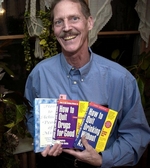
WILMINGTON, DE: Jerry Dorsman, 59, quit drinking without AA and wrote a book about how to do it. The Delaware News Journal features the author's story in its current online issue. Dorsman, who is now 25 years sober, attended AA but found the spirituality "too narrow and forced," and he saw inadequate attention being paid to stress reduction and nutrition, among other points. Dorsman's book, How to Quit Drinking Without AA, shares his approach. Details.